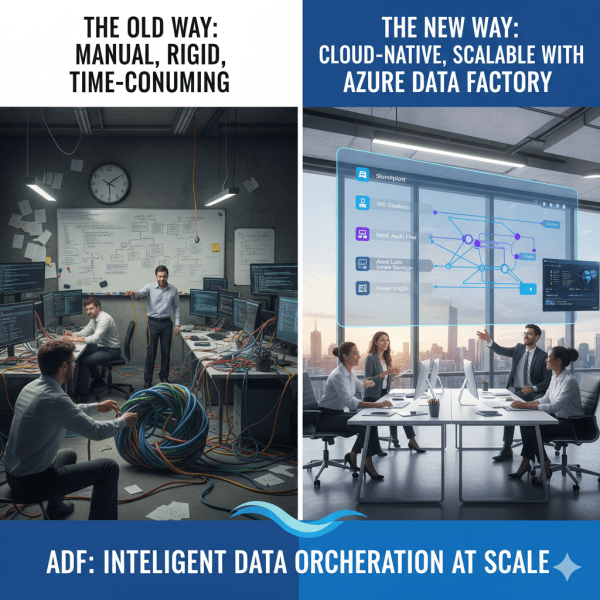
There was a time when moving data from multiple sources felt like untangling a giant knot. Every data refresh meant scripts breaking, manual checks, and long hours spent ensuring everything flowed from source to destination correctly. Then Azure Data Factory (ADF) entered the picture, and it didn’t just simplify ETL and ELT. It completely transformed how we think about data orchestration at scale.
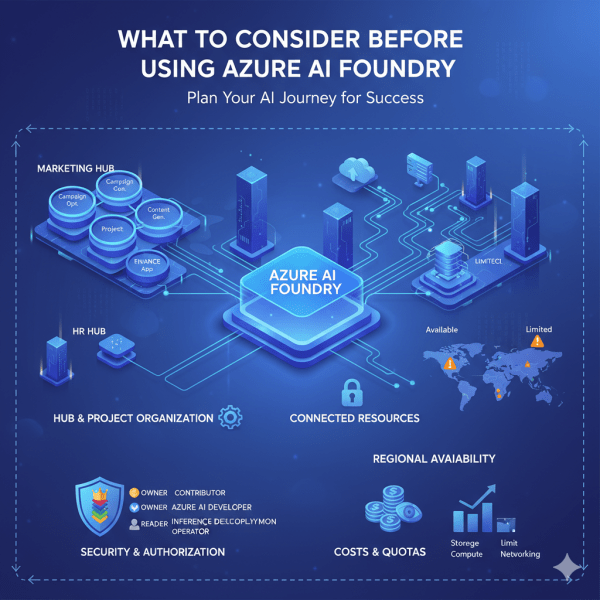
What to Consider Before Using Azure AI Foundry
Azure AI Foundry is a powerful platform for developing and scaling AI solutions. It gives teams structure through hubs and projects, shared resources, and collaborative tools. But to get the most from Foundry, it is important to plan carefully. From resource organization to cost management, a little forethought can make your AI journey smoother and more efficient.
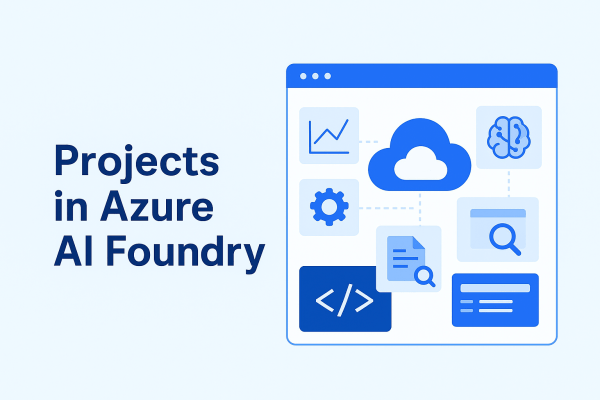
Projects in Azure AI Foundry: Where Ideas Turn Into AI Solutions
A project in Azure AI Foundry is a workspace designed for a specific AI development effort. Each project connects to a hub, giving it access to shared resources while also providing its own dedicated environment for collaboration and experimentation.
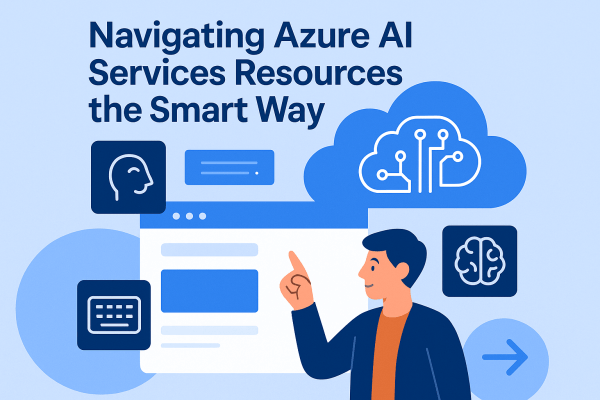
Navigating Azure AI Services Resources – the Smart Way
Imagine you’re about to build something amazing with Azure AI. Before you dive into writing code or training models, there’s one big question: how do you set up your AI resources? This step might feel like just a checkbox, but it’s the foundation of how your application will scale, perform, and even stay within budget.
Azure vs. Snowflake: When to Use Which?
In the cloud data world, Microsoft Azure and Snowflake often come up as leading choices for building scalable data platforms. While they overlap in some capabilities, their core strengths and ecosystem focus make them suited to different use cases.
Data Lake vs. Data Warehouse: When to Use Which?
When organizations talk about becoming data-driven, the debate often comes down to where should data live and how should it be structured? That’s where the Data Lake and the Data Warehouse come into play. Both are critical, but their purposes and strengths differ.
Real-Time Analytics in Microsoft Fabric
In today’s data-driven world, many business scenarios demand insights not in hours or days, but in seconds. From monitoring IoT devices to tracking live transactions, real-time analytics enables organizations to act immediately. Microsoft Fabric delivers this capability through KQL databases and event streams, making it easier to ingest, query, and analyze fast-moving data at scale.
Analyzing Data with Power BI in Microsoft Fabric
Data becomes valuable when it’s turned into insights that drive action. In Microsoft Fabric, this is where Power BI shines. By connecting directly to Lakehouses and Warehouses in Fabric, you can build interactive dashboards and reports, then publish and share them securely across your organization.
Transforming Data with Dataflows Gen2 in Microsoft Fabric
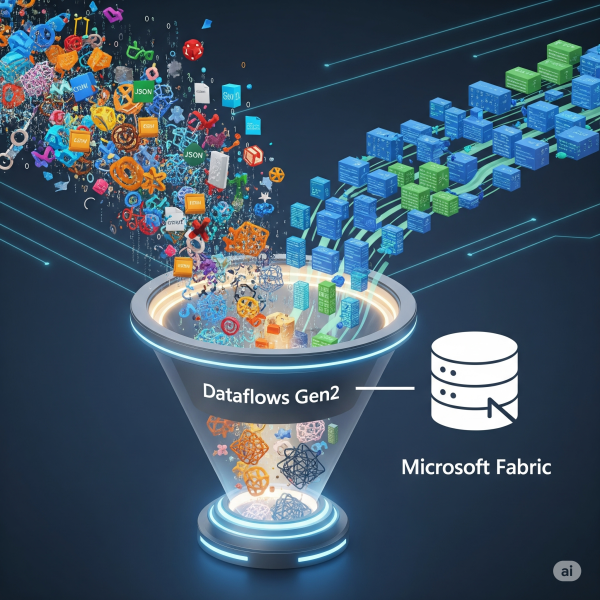
In Microsoft Fabric, raw data from multiple sources flows into the OneLake environment. But raw data isn’t always ready for analytics. It needs to be cleaned, reshaped, and enriched before it powers business intelligence, AI, or advanced analytics. That’s where Dataflows Gen2 come in. They let you prepare and transform data at scale inside Fabric, without needing heavy coding, while still integrating tightly with other Fabric workloads.
Ingesting Data with Data Factory in Microsoft Fabric
In Microsoft Fabric, Data Factory is the powerhouse behind that process. It’s the next generation of Azure Data Factory, built right into the Fabric platform; making it easier than ever to: - Connect to hundreds of data sources - Transform and clean data on the fly - Schedule and automate ingestion (without writing code)
Building a Lakehouse in Microsoft Fabric
A Lakehouse in Microsoft Fabric combines the scalability and flexibility of a data lake with the structure and performance of a data warehouse. It’s an all-in-one approach for storing, processing, and analyzing both structured and unstructured data.
Setting Up Your First Microsoft Fabric Workspace
If you’re starting with Microsoft Fabric, the first thing you’ll need is a workspace, it is a central hub where all data-related assets live. Think of it as your project’s headquarters: datasets, pipelines, Lakehouses, dashboards, and governance settings are all managed here.