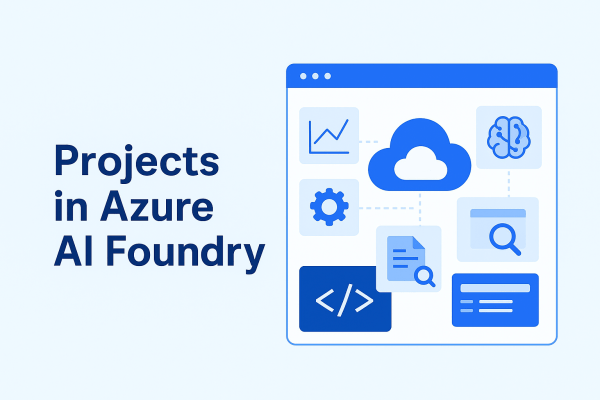
A project in Azure AI Foundry is a workspace designed for a specific AI development effort. Each project connects to a hub, giving it access to shared resources while also providing its own dedicated environment for collaboration and experimentation.
Real-Time Analytics in Microsoft Fabric
In today’s data-driven world, many business scenarios demand insights not in hours or days, but in seconds. From monitoring IoT devices to tracking live transactions, real-time analytics enables organizations to act immediately. Microsoft Fabric delivers this capability through KQL databases and event streams, making it easier to ingest, query, and analyze fast-moving data at scale.
Transforming Data with Dataflows Gen2 in Microsoft Fabric
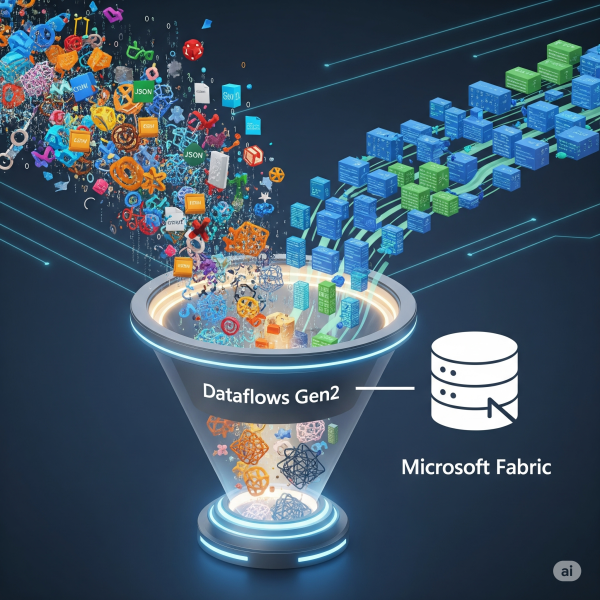
In Microsoft Fabric, raw data from multiple sources flows into the OneLake environment. But raw data isn’t always ready for analytics. It needs to be cleaned, reshaped, and enriched before it powers business intelligence, AI, or advanced analytics. That’s where Dataflows Gen2 come in. They let you prepare and transform data at scale inside Fabric, without needing heavy coding, while still integrating tightly with other Fabric workloads.
Setting Up Your First Microsoft Fabric Workspace
If you’re starting with Microsoft Fabric, the first thing you’ll need is a workspace, it is a central hub where all data-related assets live. Think of it as your project’s headquarters: datasets, pipelines, Lakehouses, dashboards, and governance settings are all managed here.
What Is Microsoft Fabric and Why It Matters in 2025
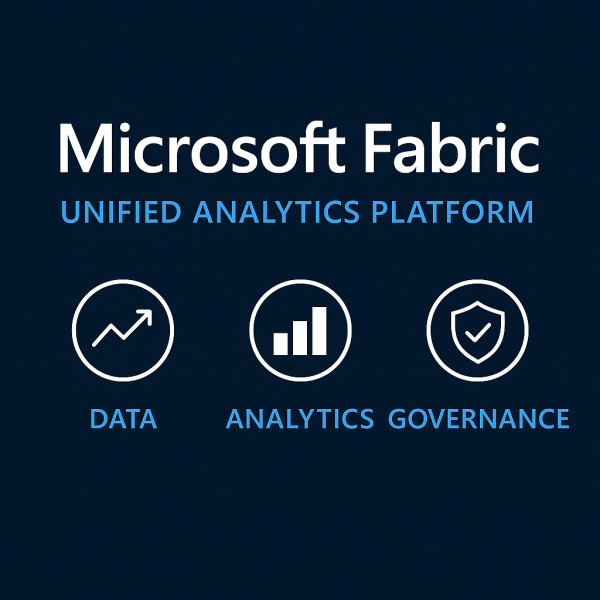
In the last decade, data platforms have evolved from siloed solutions into fully integrated ecosystems. Microsoft Fabric is the latest and arguably boldest step in this evolution, bringing together data engineering, analytics, and governance into a single end-to-end SaaS platform.
Demystifying Data Cataloguing: A Practical Guide for Modern Enterprises
In a world where data is everywhere but rarely well-understood, data cataloguing is becoming a critical pillar of enterprise data strategy. Whether you're a data engineer, analyst, or business leader, knowing what data you have, where it lives, and how to trust it is no longer a luxury, it’s a necessity.
Top Azure Services You Should Master in 2025
Microsoft Azure remains a powerhouse in the cloud ecosystem, driving innovation across AI, automation, and data analytics. As industries increasingly rely on cloud-native solutions, mastering the right Azure services in 2025 is essential for cloud professionals, developers, and architects who want to stay ahead of the curve.
Power BI DAX Hacks for Faster Reporting
If you’ve used Power BI for any amount of time, you know that DAX (Data Analysis Expressions) is both powerful and, at times, puzzling. While it unlocks deep analytical capabilities, it can also slow down your reports if not used wisely.
Storytelling with Data: Beyond the Graphs
In a world full of dashboards, reports, and visualizations, simply showing data is not enough. If you want your audience to understand, remember, and act on the insights, you need to go beyond the graph. You need to tell a story. Welcome to the world of storytelling with data, where raw numbers are transformed into compelling, clear, and meaningful narratives that spark decisions.
Secrets to Designing a High-Impact Dashboard
In today’s data-driven world, dashboards are everywhere; in executive meetings, marketing reviews, sales stand-ups, and operations war rooms. Yet despite their prevalence, most dashboards fail to deliver real value. They’re cluttered, confusing, or just ignored. A high-impact dashboard isn’t just a collection of charts. It’s a powerful decision-making tool. When designed well, it answers questions before they’re asked and guides teams to take confident, timely action.
The Role of Data Governance in Business Growth
Data governance is a growth enabler, not just a compliance formality. When data is governed effectively, organizations move faster, collaborate better, and scale with confidence.
What Master Data Management (MDM) Really Means in 2025
At its core, MDM is the practice of defining, managing, and governing the most critical data entities such as customers, products, suppliers, locations, employees so that the entire organization agrees on a single version of the truth.