Automating your Power BI dataset refresh can save time and ensure your reports always stay up to date. In this post, we’ll walk through how to trigger a Power BI report refresh directly from Azure Data Factory (ADF) using an App Registration in Azure Entra ID.
Building Responsible AI: Principles Every Engineer Should Follow
As engineers, we don’t just build systems. We shape experiences that affect people and society. AI is powered by probabilistic models trained on data, which means it can sometimes amplify biases or make mistakes that impact real lives. This is why principles of Responsible AI matter. At Microsoft, several core principles guide the responsible development and deployment of AI systems. Let’s look at them one by one.
Exploring the Core Capabilities of Artificial Intelligence
Today, the real magic of AI lies in its capabilities. These are the practical functions that bring intelligence into software applications. Let’s explore the key AI capabilities that developers are using to build smarter, more responsive, and human-like systems.
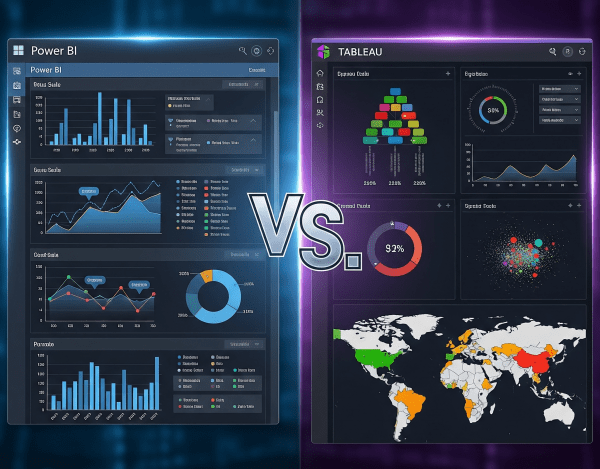
Power BI vs. Tableau: Which One Is Best?
When it comes to data visualization and business intelligence (BI), Power BI and Tableau are two of the most popular platforms in the world. Both turn raw data into insights, but they differ in cost, ecosystem fit, and flexibility.
Microsoft Fabric Best Practices & Roadmap
Microsoft Fabric brings together data engineering, data science, real-time analytics, and business intelligence into one unified platform. With so many capabilities available, organizations often ask: How do we get the most out of Fabric today while preparing for what’s coming next? This post shares practical performance tuning tips, cost optimization strategies, and a look at the Fabric roadmap based on the latest Microsoft updates.
Analyzing Data with Power BI in Microsoft Fabric
Data becomes valuable when it’s turned into insights that drive action. In Microsoft Fabric, this is where Power BI shines. By connecting directly to Lakehouses and Warehouses in Fabric, you can build interactive dashboards and reports, then publish and share them securely across your organization.
What Makes a Good Data Governance Policy?
Turning chaos into clarity across your data ecosystem In today’s data-driven world, organizations are generating massive volumes of information, but without clear governance, that data can quickly become a liability instead of an asset. A well-crafted data governance policy is more than just documentation. It’s the foundation of trust, compliance, security, and value across your... Continue Reading →
Power BI DAX Hacks for Faster Reporting
If you’ve used Power BI for any amount of time, you know that DAX (Data Analysis Expressions) is both powerful and, at times, puzzling. While it unlocks deep analytical capabilities, it can also slow down your reports if not used wisely.
Storytelling with Data: Beyond the Graphs
In a world full of dashboards, reports, and visualizations, simply showing data is not enough. If you want your audience to understand, remember, and act on the insights, you need to go beyond the graph. You need to tell a story. Welcome to the world of storytelling with data, where raw numbers are transformed into compelling, clear, and meaningful narratives that spark decisions.
How Building a Data Warehouse Changes a Company
At its core, a data warehouse (DW) is a centralized repository that consolidates data from across the enterprise, spanning sales, finance, marketing, supply chain, and HR into a clean, structured, and analytics-ready format.
What Master Data Management (MDM) Really Means in 2025
At its core, MDM is the practice of defining, managing, and governing the most critical data entities such as customers, products, suppliers, locations, employees so that the entire organization agrees on a single version of the truth.
What are the qualities of a good Data Analyst?
A good Data Analyst should combine technical expertise, strong analytical skills, business acumen, and effective communication to deliver valuable insights and drive data-informed decision-making within an organization.