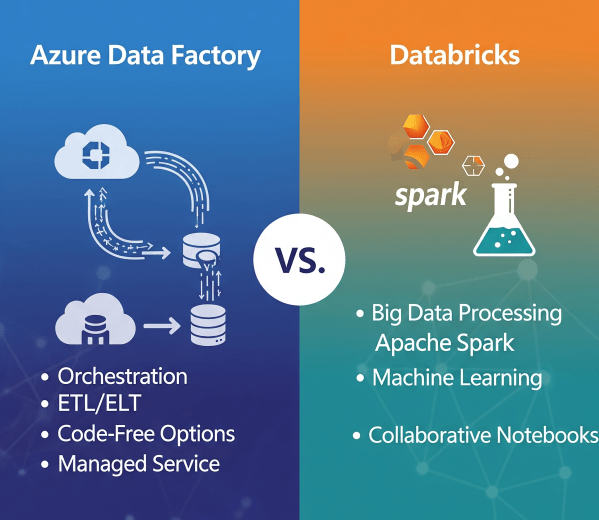
In today’s cloud-first world, enterprises have no shortage of data services. But when it comes to building scalable, reliable data pipelines, two names often dominate the conversation: Azure Data Factory (ADF) and Azure Databricks.
Microsoft Fabric Best Practices & Roadmap
Microsoft Fabric brings together data engineering, data science, real-time analytics, and business intelligence into one unified platform. With so many capabilities available, organizations often ask: How do we get the most out of Fabric today while preparing for what’s coming next? This post shares practical performance tuning tips, cost optimization strategies, and a look at the Fabric roadmap based on the latest Microsoft updates.
Real-Time Analytics in Microsoft Fabric
In today’s data-driven world, many business scenarios demand insights not in hours or days, but in seconds. From monitoring IoT devices to tracking live transactions, real-time analytics enables organizations to act immediately. Microsoft Fabric delivers this capability through KQL databases and event streams, making it easier to ingest, query, and analyze fast-moving data at scale.
Analyzing Data with Power BI in Microsoft Fabric
Data becomes valuable when it’s turned into insights that drive action. In Microsoft Fabric, this is where Power BI shines. By connecting directly to Lakehouses and Warehouses in Fabric, you can build interactive dashboards and reports, then publish and share them securely across your organization.
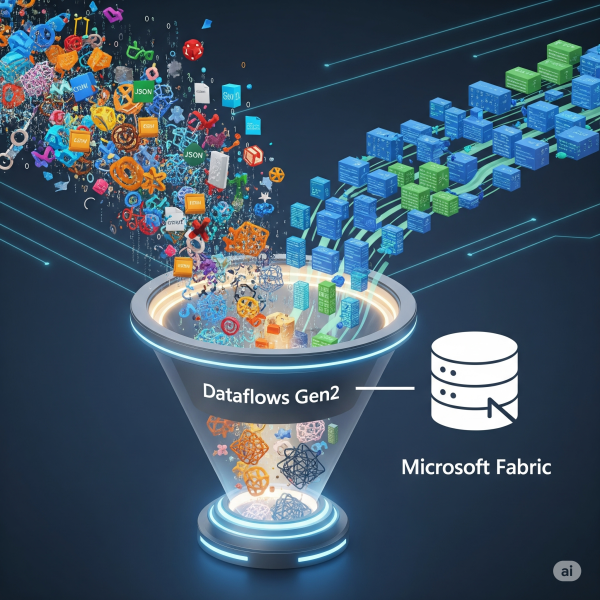
Transforming Data with Dataflows Gen2 in Microsoft Fabric
In Microsoft Fabric, raw data from multiple sources flows into the OneLake environment. But raw data isn’t always ready for analytics. It needs to be cleaned, reshaped, and enriched before it powers business intelligence, AI, or advanced analytics. That’s where Dataflows Gen2 come in. They let you prepare and transform data at scale inside Fabric, without needing heavy coding, while still integrating tightly with other Fabric workloads.
Ingesting Data with Data Factory in Microsoft Fabric
In Microsoft Fabric, Data Factory is the powerhouse behind that process. It’s the next generation of Azure Data Factory, built right into the Fabric platform; making it easier than ever to: - Connect to hundreds of data sources - Transform and clean data on the fly - Schedule and automate ingestion (without writing code)
Exploring OneLake: The Heart of Microsoft Fabric
OneLake is Microsoft Fabric’s built-in data lake, designed to store data in open formats like Delta Parquet and make it instantly available to all Fabric experiences (Lakehouse, Data Factory, Power BI, Real-Time Analytics).
Setting Up Your First Microsoft Fabric Workspace
If you’re starting with Microsoft Fabric, the first thing you’ll need is a workspace, it is a central hub where all data-related assets live. Think of it as your project’s headquarters: datasets, pipelines, Lakehouses, dashboards, and governance settings are all managed here.
What Is Microsoft Fabric and Why It Matters in 2025
In the last decade, data platforms have evolved from siloed solutions into fully integrated ecosystems. Microsoft Fabric is the latest and arguably boldest step in this evolution, bringing together data engineering, analytics, and governance into a single end-to-end SaaS platform.
Demystifying AI vs. ML: Understanding the Key Differences
In the realm of modern technology, the terms Artificial Intelligence (AI) and Machine Learning (ML) often swirl together in conversations, creating an aura of confusion. Yet, amidst the haze, clarity emerges when we grasp the fundamental disparities between the two. AI, the embodiment of simulated human intelligence in machines, stands as the overarching concept, while Machine Learning, a subset of AI, empowers computers to learn from data and improve their performance iteratively. Understanding this dichotomy unveils the distinct roles each plays in revolutionizing industries and shaping our future.
What are latest trends in the field of data analytics?
The field of data analytics is evolving rapidly, and new trends and technologies are emerging every month, below are the latest trends as of now: Augmented Analytics: Augmented analytics combines artificial intelligence (AI) and machine learning (ML) techniques with data analytics to automate data preparation, insight generation, and data visualization. It empowers non-technical users to... Continue Reading →
Will Microsoft Copilot change the Cloud Computing world?
Microsoft Copilot is an AI-powered code completion tool developed by Microsoft in collaboration with OpenAI that uses machine learning to provide code suggestions and completions to developers as they write code. It is designed to help developers be more productive by automating some of the more repetitive tasks of coding. It has the potential to... Continue Reading →