Today, the real magic of AI lies in its capabilities. These are the practical functions that bring intelligence into software applications. Let’s explore the key AI capabilities that developers are using to build smarter, more responsive, and human-like systems.
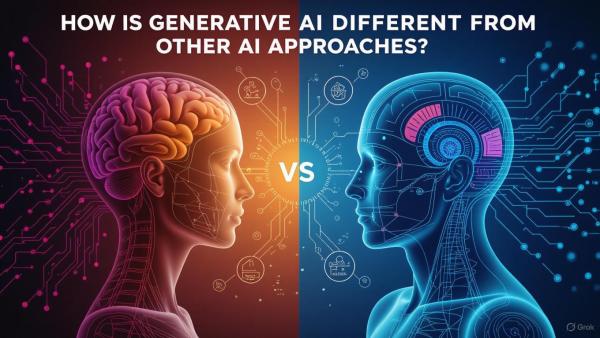
How is Generative AI Different from Other AI Approaches?
Artificial Intelligence (AI) is everywhere these days, from personalized Netflix recommendations to chatbots that answer your questions in real-time. But not all AI is built the same. A key distinction exists between traditional AI approaches and the rising star: Generative AI (Gen AI).
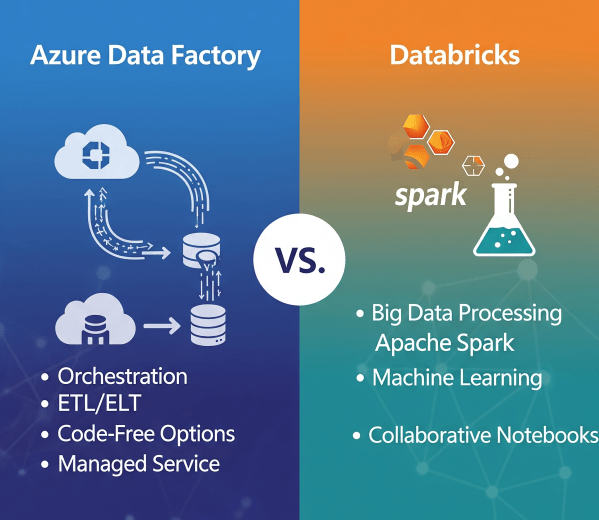
Azure Data Factory vs. Databricks: When to Use What?
In today’s cloud-first world, enterprises have no shortage of data services. But when it comes to building scalable, reliable data pipelines, two names often dominate the conversation: Azure Data Factory (ADF) and Azure Databricks.
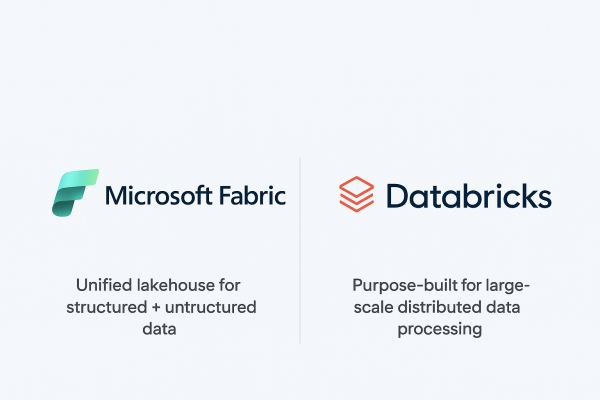
Microsoft Fabric vs. Databricks: When to Use Each?
When it comes to building a modern data platform in Azure, two technologies often spark debate: Microsoft Fabric and Databricks. Both are powerful. Both can process, transform, and analyze data. But they serve different purposes, and the smartest organizations know when to use each.
Demystifying AI vs. ML: Understanding the Key Differences
In the realm of modern technology, the terms Artificial Intelligence (AI) and Machine Learning (ML) often swirl together in conversations, creating an aura of confusion. Yet, amidst the haze, clarity emerges when we grasp the fundamental disparities between the two. AI, the embodiment of simulated human intelligence in machines, stands as the overarching concept, while Machine Learning, a subset of AI, empowers computers to learn from data and improve their performance iteratively. Understanding this dichotomy unveils the distinct roles each plays in revolutionizing industries and shaping our future.
What are latest trends in the field of data analytics?
The field of data analytics is evolving rapidly, and new trends and technologies are emerging every month, below are the latest trends as of now: Augmented Analytics: Augmented analytics combines artificial intelligence (AI) and machine learning (ML) techniques with data analytics to automate data preparation, insight generation, and data visualization. It empowers non-technical users to... Continue Reading →
Will Microsoft Copilot change the Cloud Computing world?
Microsoft Copilot is an AI-powered code completion tool developed by Microsoft in collaboration with OpenAI that uses machine learning to provide code suggestions and completions to developers as they write code. It is designed to help developers be more productive by automating some of the more repetitive tasks of coding. It has the potential to... Continue Reading →
Which Jobs will not be affected by AI?
AI has become the Buzzword of the 21st century, anyone who even has a little idea of what AI can do is either excited, nervous, or fearful of it, and rightly so.
Simple Machine Learning Program in Python to Use Linear Regression to predict House Price.
Requirement: The main requirement is to be able to assign and predict House Price in a given location based on age of house, distance from Airport and number of conveniences stores within 5 km radius.
Everything you need to know about Big Data
Big Data refers to the data which is nearly impossible to process using a single computer as it is huge in size, generated frequently and is in many different formats.
Machine Learning: What is Reinforcement Learning
Reinforcement Learning is an area of Machine Learning which is applied when you don’t have training dataset and want the machine to learn from its experience.
Machine Learning : What is UnSupervised Learning
Unsupervised Learning The basic idea of Unsupervised Learning is to feed machine with as much data as possible without providing any label on the data and letting machine group similar data together to form clusters and provide insights on them. In Unsupervised Learning, the learning algorithm tries to understand relationships between various inputs without any... Continue Reading →