In the last decade, data platforms have evolved from siloed solutions into fully integrated ecosystems.
Microsoft Fabric is the latest and arguably boldest step in this evolution, bringing together data engineering, analytics, and governance into a single end-to-end SaaS platform.
If you’ve ever juggled multiple tools for ingestion, transformation, storage, and visualization, you know the pain of switching contexts, managing licenses, and stitching together security policies.
Fabric aims to eliminate that complexity by giving you one place to handle the entire data lifecycle.
What Exactly Is Microsoft Fabric?
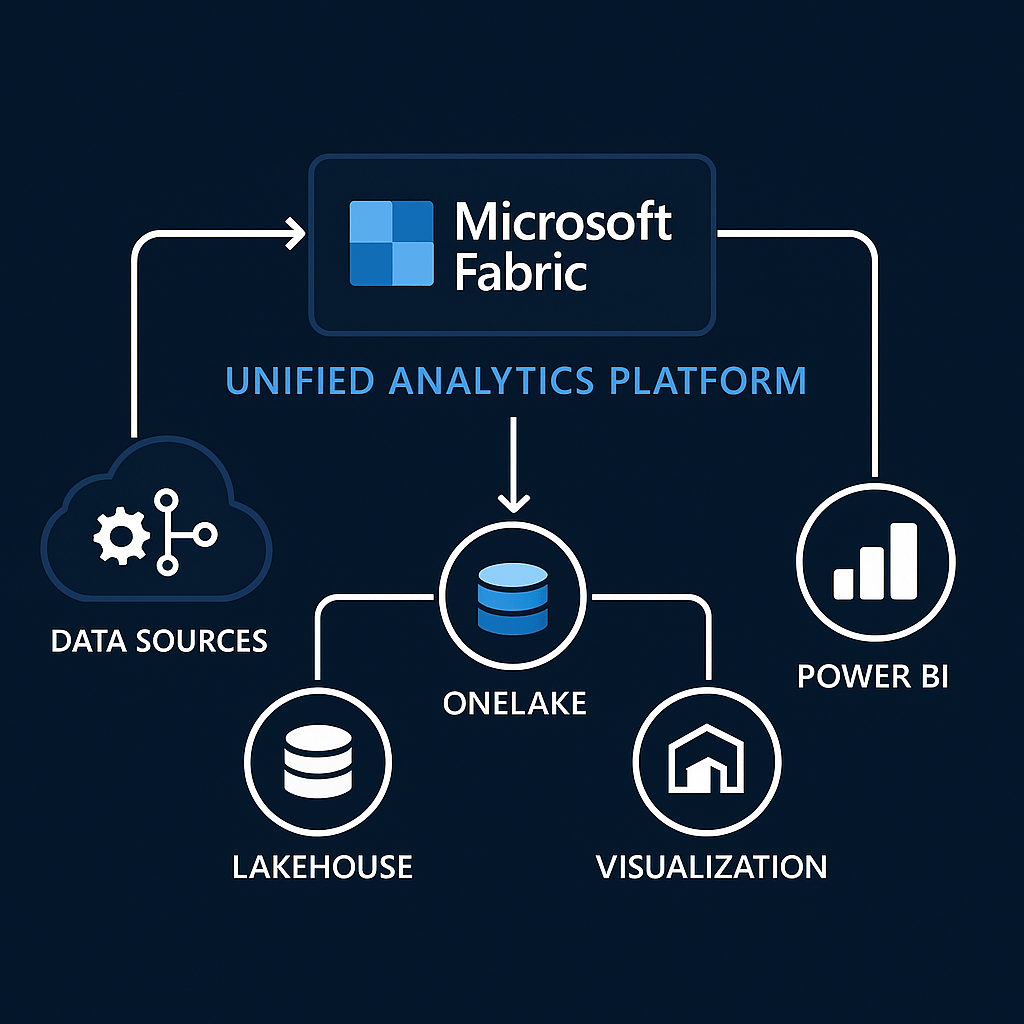
Microsoft Fabric is a unified analytics platform that combines the capabilities of Power BI, Azure Data Factory, Azure Synapse Analytics, and other Microsoft services into a single, cloud-native experience.
Think of it as a “data operating system” where everything from raw ingestion to executive dashboards lives under one roof and is powered by OneLake, Microsoft’s multi-cloud data lake storage.
The Key Components of Microsoft Fabric
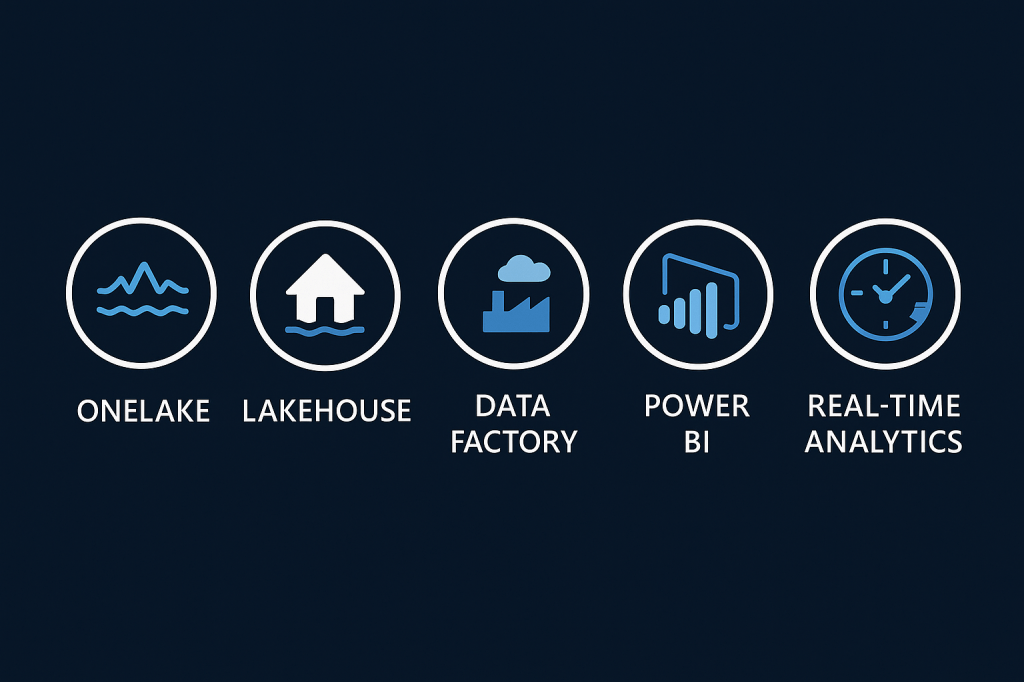
Here’s a quick tour of the pillars that make Fabric tick:
- OneLake: The central storage layer
- A single, logical data lake for your organization.
- Compatible with open formats like Delta Parquet.
- Shortcuts let you connect external data sources without duplication.
- Lakehouse: Your hybrid storage + analytics workspace
- Combines the simplicity of a data lake with the structure of a data warehouse.
- Ideal for data scientists and engineers to store, query, and process data.
- Data Factory: ETL & ELT pipelines made easy
- Modernized Azure Data Factory inside Fabric.
- No-code and code-first options for ingestion and transformation.
- Supports batch, incremental, and near-real-time loads.
- Power BI: Analytics & storytelling
- Integrated natively into Fabric for visualizing and sharing insights.
- Directly connects to Lakehouse, Warehouse, or OneLake.
- Real-Time Analytics: Streaming & instant insights
- Built on Kusto Query Language (KQL) tech from Azure Data Explorer.
- Ideal for IoT, telemetry, and event-driven workloads.
Why It Matters in 2025

In a data-driven business world, speed and trust are everything.
- One platform, one security model → No more manually syncing permissions across tools.
- Lower total cost of ownership → Stop paying for and integrating five different services.
- End-to-end governance → From raw data to dashboards, compliance stays intact.
- Ready for AI → Fabric’s unified architecture makes it easier to feed reliable data into AI models without messy prep.
By 2025, companies that master data unification will move faster, spend less, and unlock insights their competitors can’t see. Microsoft Fabric isn’t just a tool; it’s a new way of thinking about the data ecosystem.
 Ization
Leave a comment